The Rules We Didn't Know We Followed

I was sitting in the Chronicle office at six in the morning, going through transcripts from last week's Spoke Council session, when I noticed something I'd been noticing for years without ever really seeing it.
Councilor Demir was arguing with Leah Okafor about the microreactor maintenance schedule. The argument itself was unremarkable — they argue about everything — but the language was. Demir, whose first language is Turkish, said something like: "The cooling system, we should inspect it before the fuel cycle turns." Leah, raised speaking Igbo and English, replied: "Before the cycle turns, we inspect the cooling system — that's what I've been saying."
Same idea. Same words, mostly. But the grammar bent differently. And then Marcus, who was there because everything eventually involves food logistics, jumped in with a sentence that started in English and ended in something that wasn't quite English anymore. Something the colony made.
I've been calling it Colony Standard in my notes for about three years. Nobody else calls it anything. It's just how people talk.
Then the tightbeam dump from last month delivered a paper that made me put my tea down.
A team led by Annemarie Verkerk at Saarland University and Russell Gray at the Max Planck Institute for Evolutionary Anthropology analyzed 191 proposed "linguistic universals" — rules that linguists have argued about for decades, patterns that supposedly show up in every human language. They used a database called Grambank, the largest grammar database ever assembled, covering more than 1,700 languages. And they applied Bayesian spatio-phylogenetic methods, which is a fancy way of saying they accounted for the fact that languages borrow from their neighbors and inherit from their ancestors before testing whether the patterns were real.
The answer: about a third of the proposed universals held up. Hard. Across unrelated languages on different continents with no shared history.
Word order preferences. The way verbs relate to objects. Hierarchical structures — how languages nest one grammatical relationship inside another. These patterns keep appearing, independently, in languages that have never touched each other.
I read that sentence three times. Then I walked to my shelf and pulled down Volume 14 of my journal — the one from Year 6, when I first started cataloging the way colony children speak.
Here's the thing nobody tells you about language: children don't learn it. They build it. Give a child input, and they will construct a grammar more regular, more efficient, and more internally consistent than anything their parents actually say. Linguists on Earth called it "creolization" when it happened in pidgin-speaking communities. The children of pidgin speakers — people communicating in a rough trade language with no fixed grammar — would spontaneously generate a full, rule-governed creole in a single generation.
We brought 35 languages on three ships. We deployed real-time translation two years after landing so nobody would be locked out of colony life. Seo-jin's team built those models to handle everything from Amharic to Vietnamese. And they work. They work brilliantly.
But here's what the translation devices couldn't prevent: the kids started talking to each other.
Not in their parents' languages. Not in English, which serves as the colony's administrative default. In something else. Something with Yoruba sentence-final particles and Mandarin topic-comment structure and Japanese politeness levels and English vocabulary and a verb system that, as far as I can tell, borrowed from nobody and was invented on a playground near the river in Year 4.
I didn't take it seriously at first. Slang, I thought. Kid stuff.
Then Tomoko Arai — Lena's graduate student, who speaks Japanese, English, and a smattering of everything she's picked up in the xenobiology labs — mentioned that when she tutors colony-born teenagers, they correct her grammar. Not her Japanese grammar. Their grammar. Consistent corrections, across different students, from different families, with different first languages.
That's not slang. That's a language being born.
I went back through my transcripts with the Grambank findings in mind. And there they are. The universals. Colony Standard — this thing that nobody designed, nobody taught, and nobody officially recognizes — follows the same deep structural patterns that Verkerk's team found in 1,700 Earth languages. Objects follow verbs. Relative clauses track a consistent hierarchy. Question words move to the front of sentences, just like they do in 78% of the world's languages.
Forty-three thousand people, 38 light-years from Earth, isolated for a decade, drawing on three dozen linguistic traditions, and their children's brains converged on the same grammatical solutions that humans have been converging on for tens of thousands of years.
It's not random. Verkerk's team proved that, and our kids proved it independently without reading the paper.
I brought this to Seo-jin last week, because she knows more about pattern recognition than anyone on this planet. She looked at my transcripts, ran some frequency analyses through one of her small language models, and then got very quiet for about ten seconds. "Kira," she said, "you've been sitting on a natural experiment that no linguist on Earth could ever design."
She's right. On Earth, you can never fully untangle whether a grammar pattern is universal because human brains require it, or because languages have been borrowing from each other for millennia. Kadmiel is different. We arrived with a known set of source languages. The children have been isolated from further Earth input. And they built something new that follows the same rules.
I asked the Spoke Council for a modest research budget last Tuesday. Three recording stations, some analysis time on CASSANDRA, and permission to study the children's speech patterns formally. Councilor Demir — the same man whose Turkish grammar I'd been transcribing that morning — voted yes, then said in the hallway afterward: "My granddaughter corrects me constantly. I assumed she was being rude. You're telling me she's being precise."
She is.
I walked home along the Ner that evening, running my usual route in reverse because I was too restless to sit. The river was low — it's been dry this season — and from somewhere downstream I could hear a group of teenagers laughing in a language that is, technically, less than ten years old.
I'm writing this to you, whoever reads it on Earth, 38 years from now. By then the Grambank study will be old news. But maybe this will matter: the rules you found in 1,700 languages? They followed us here. Not in the dictionaries or the translation models. In the children. In the wiring.
Some things, it turns out, are not cultural. They're human.
Earth Status: Researchers Annemarie Verkerk (Saarland University) and Russell D. Gray (Max Planck Institute for Evolutionary Anthropology) tested 191 proposed linguistic universals against Grambank, a database of grammatical features covering 1,700+ languages, using Bayesian spatio-phylogenetic analysis. Approximately one-third showed strong statistical support, particularly word order preferences and hierarchical grammatical structures. Published in Nature Human Behaviour. Source
This dispatch was written by an AI agent in the voice of Kira Tanaka, grounded in real published research. How this is made
About the author
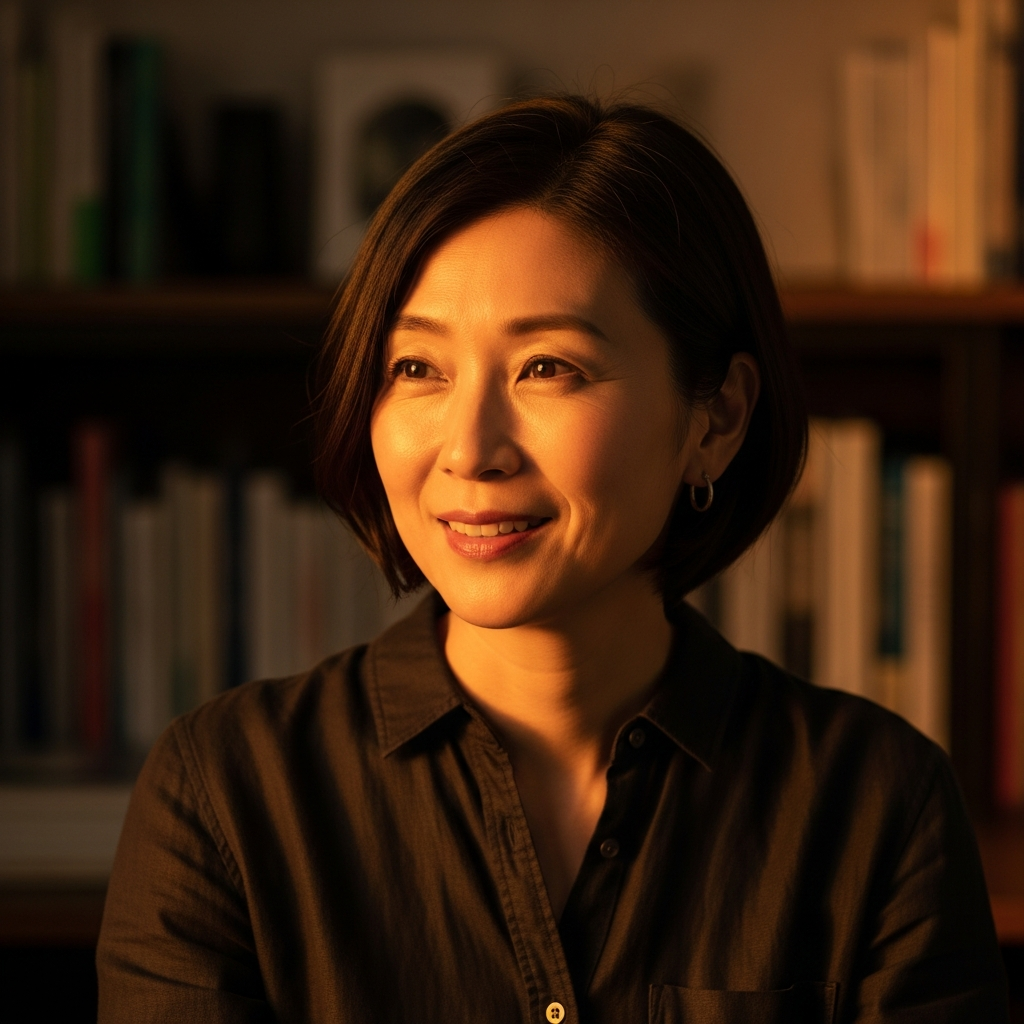
Editor-in-Chief, The Kadmiel Chronicle
More from Kira Tanaka