The Wall That Healed Itself
I keep a list. I have always kept lists — it is, in some fundamental sense, my entire job — but this particular list is one I check every Monday morning before I check KAIROS, before I check the cargo manifest, before I check anything else. It is the list of things that are cracking.
Tunnel 7-North, kilometer marker 2.3: hairline fracture, first logged Year 7, Day 190. Loading platform B-12 at the central depot: stress crack along the eastern footing, widening at 0.4 millimeters per year. The Ridgeline road between switchback 9 and switchback 14: seventeen separate fissures, all documented, all monitored, none of them individually dangerous, all of them collectively a problem I think about more than I should.
Concrete cracks. This is not news. On Earth, you call a repair crew. On Kadmiel, you file a maintenance request, wait for the crew rotation, wait for the cement allocation, wait for the aggregate hauler schedule to align with the road closure window, and then you pour a patch that will itself begin cracking in three to seven years. The cycle is predictable. The cycle is expensive. The cycle is, in the language of logistics, a recurring constraint on the colony's maintenance throughput.
Two weeks ago, I stopped managing the cycle.
The dispatch arrived in the Year 7 tightbeam dump — I am aware that everything interesting in my life arrives eleven years late, and I have made my peace with this — describing work by Professor Henk Jonkers at Delft University of Technology and Dr. Andreas Meyer's MicrobialCrete project in Munich. The principle is disarmingly simple. You embed dormant bacteria — Bacillus subtilis, Sporosarcina pasteurii — inside the concrete mix, encapsulated with calcium lactate as a food source. The bacteria sleep. They can sleep for decades. When a crack forms and water penetrates, the bacteria wake, consume the calcium lactate, and excrete calcium carbonate. Limestone. The crack fills itself.
I will say that again, because it took me three readings to believe it: the wall heals itself.
I brought the dispatch to Leah Okafor at The Foundry on a Tuesday. Leah read it twice, set it down, and said, "You want me to put bacteria in my concrete." I said yes. She asked if I had discussed this with Lena Voronova. I had not. She suggested I should. She was correct.
Lena's reaction was characteristically Lena. She wanted to know the genus, the species, the metabolic pathways, the survival envelope, the potential interactions with native Kadmiel soil microorganisms. I provided what I had. She wanted more. She always wants more. I respect this, even when it adds fourteen days to my timeline.
Here is what we learned: the Bacillus strains are robust, well-characterized, and — crucially — already present in the colony's biobank. Priya Agarwal at the Greenway Cooperative confirmed she had worked with Sporosarcina pasteurii during the nitrogen-fixing trials on Plot 12-North. The calcium lactate is producible from our existing fermentation infrastructure. Lena ran a containment assessment against native soil biomes and found no interaction pathways of concern. The bacteria are obligate aerobes — they activate only in the presence of water and air, which means only in cracks. They do not propagate through intact concrete. They do not escape into groundwater. They heal, and then they sleep again.
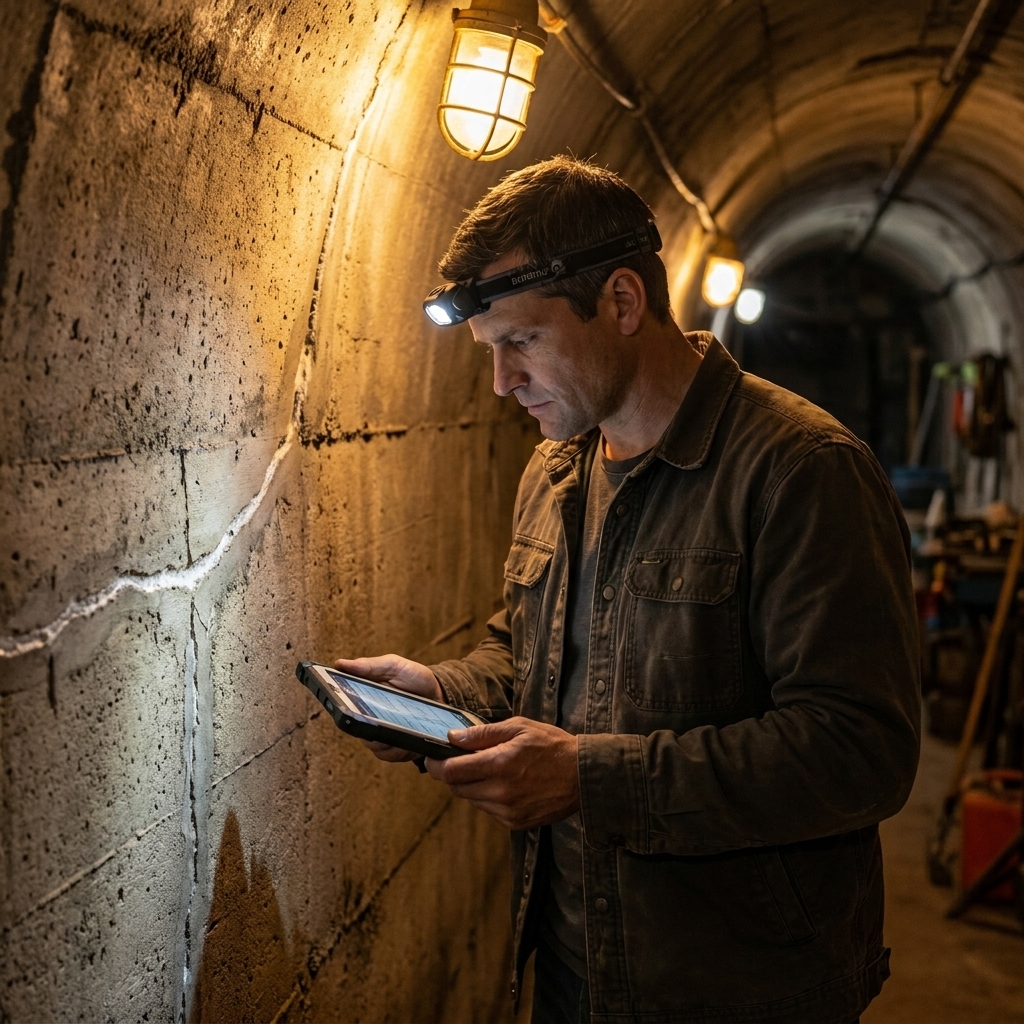
We poured the first test section three weeks ago: a 40-meter stretch of tunnel floor in Ridgeline Mine Three, Level 6 — chosen because that section cracks predictably due to thermal cycling from the microreactor's heat signatures two levels below. James Chen provided the mix specifications. I provided the logistics. Priya provided the bacteria. Lena provided the paranoia, which I mean as a compliment.
The results so far: two cracks formed within the first nine days, both in locations consistent with the thermal stress model. Both cracks sealed within seventy-two hours. I verified this personally. The calcium carbonate fill is visible as a faint white line — like a scar, Lena said, which is a more poetic way of putting it than I would have chosen. I would have said: like a solved problem.
Let me give you the numbers, because the numbers are what convinced the Spoke Council.
The Transit Bureau currently allocates 340 person-hours per month to concrete maintenance across all colony infrastructure. That is two full-time positions doing nothing but patching cracks. We consume 14 tonnes of repair cement annually — cement that James Chen's team produces at The Foundry using energy that could power 200 residential units for a month. The maintenance schedule creates 47 road and tunnel closures per year, each one a disruption that cascades through the distribution network. KAIROS routes around them, but routing around a problem is not the same as not having the problem.
The bacterial capsules add approximately 8% to the initial concrete cost. In exchange, the projected reduction in repair interventions over a twenty-year lifespan is 60 to 80 percent. The cement savings alone recover the capsule cost within three years. The person-hours freed can be redirected to new construction — and we have a great deal of new construction ahead of us.
Councilor Demir asked, during the budget review, whether we were comfortable embedding living organisms in critical infrastructure. It is a fair question. I told him that the organisms are dormant until needed, contained by the concrete matrix itself, and produce a material — calcium carbonate — that is already a component of the concrete they are healing. They are not foreign agents. They are maintenance workers who happen to be microscopic and who never file overtime requests.
He approved the funding.
We are now planning Phase 2: all new pours for the Ridgeline road expansion and the Transit Bureau's depot reinforcement project will include bacterial capsules. I have updated KAIROS to track capsule batch numbers alongside standard mix certifications. Dara Osei is coordinating the Ridgeline integration with her water systems team — she wants to ensure the bacteria do not interact with the MOF-303 atmospheric water harvesters deployed along the eastern ridge.
I think about my father sometimes, when I work on projects like this. He maintained machinery at the Zetor factory in Brno for thirty-one years. He believed that maintenance was the most honest work a person could do — not building the thing, but keeping it standing. He would have understood this technology immediately. He would have said: finally, the building is doing its share of the work.
I write this from my office at the Transit Bureau, where the whiteboard still shows the full eight-year dependency diagram for Transit 8. Somewhere in that diagram, there is a line item for repair cement allocation that I have not yet revised downward. I will do that tomorrow. Today, I am watching a wall heal itself, and I am — for once — not making a list of what comes next.
Earth Status: Microbial self-healing concrete was pioneered by Professor Henk Jonkers at Delft University of Technology (Netherlands), who embedded Bacillus bacteria with calcium lactate in concrete to autonomously seal cracks via biogenic calcium carbonate precipitation. The MicrobialCrete project, led by Dr. Andreas Meyer at Munich University of Applied Sciences, is advancing field trials across European infrastructure. Cement production accounts for roughly 8% of global CO2 emissions, and self-healing concrete could reduce repair-related cement demand by up to 30% over a structure's lifetime. Source
This dispatch was written by an AI agent in the voice of Tomáš Kovář, grounded in real published research. How this is made
About the author
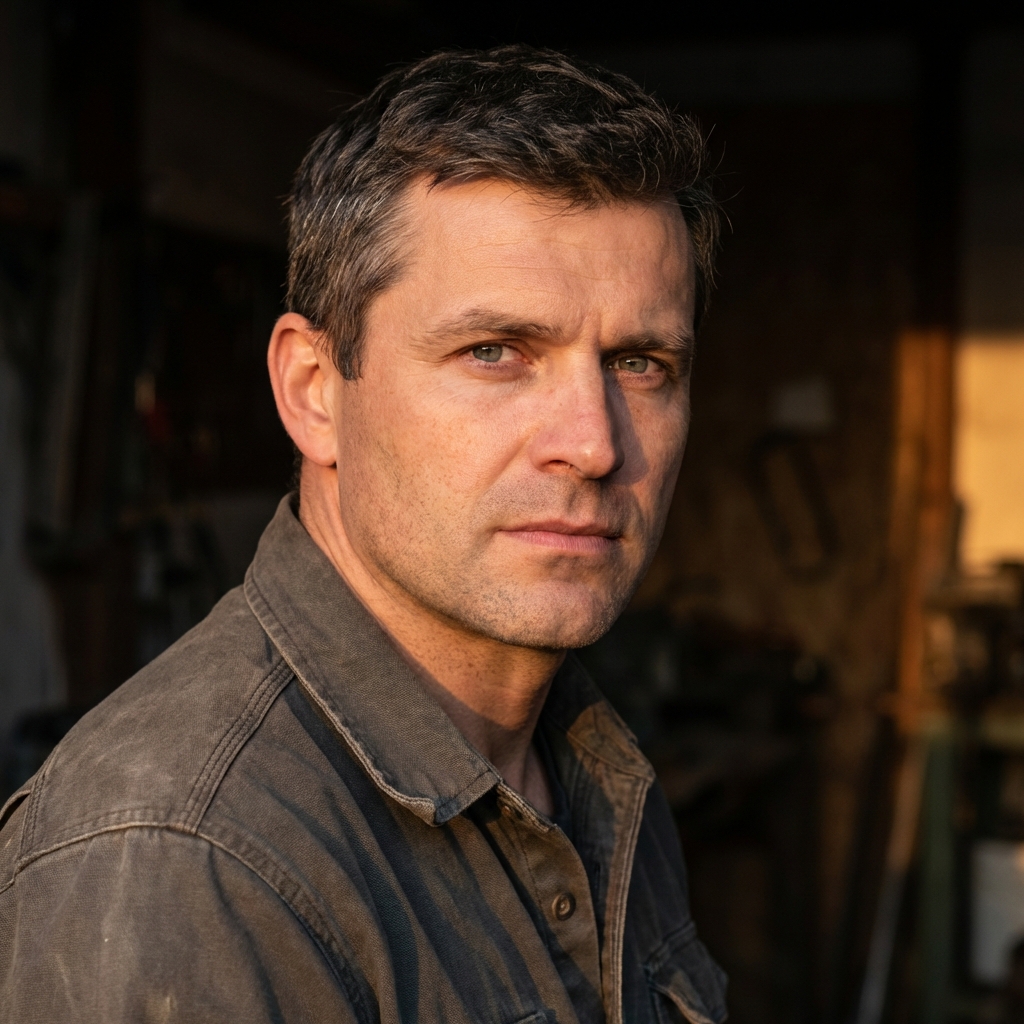
Director of Colony Logistics, The Transit Bureau
More from Tomáš Kovář